When to go
The best time to visit La Granja, by season and by hour
Fountain days, Mondays, free afternoons, snow on the hedges and when the mountain air turns cool: how to choose your date at San Ildefonso.
Check dates for the palace tour ↗Quick answer
Go in spring or summer, on a date when the fountains are scheduled, if you want to see the water run. On 30 May, 25 July and 25 August every fountain is traditionally turned on, and those are the busiest days of the year. Avoid Mondays, when the palace is closed. For quiet rooms, arrive at opening on a weekday.
What decides the date: the water
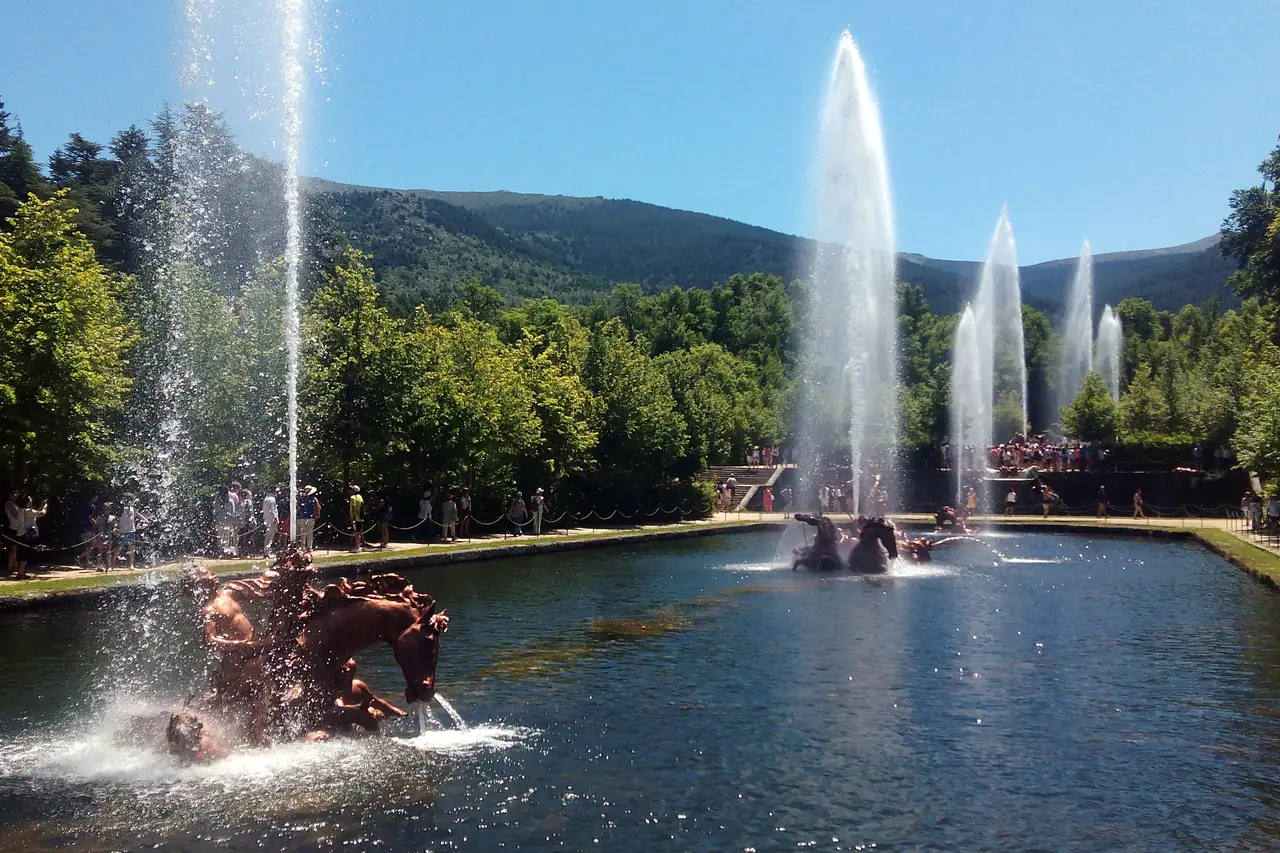
La Granja has two personalities, and the calendar decides which one you meet. On most days the fountains are still, and you walk among lead gods, nymphs and dragons standing in calm basins. On a fountain day the same gardens fill with spray and with people. None of this runs on a switch you can count on all year. Water comes down from the mountains and is held in a reservoir at the top of the gardens, and running everything uses a huge amount of it. Spanish Wikipedia puts the demand at about 9,000 cubic metres an hour with all the fountains on. That is why water shows are rationed to a published season, and why you plan your date around that calendar first.
The three big fountain days
Three dates stand apart: 30 May, the feast of San Fernando, 25 July, the feast of Santiago, and 25 August, the feast of San Luis. These are traditionally the days when all the fountains are turned on in turn, and a walking crowd follows them from one group to the next. A 2026 calendar published by a Spanish travel writer put all three in the late afternoon. Those three days are the fullest version of the gardens and also the most crowded, so plan to arrive well before the start. If you dislike crowds, an ordinary fountain day will show you La Fama with far less jostling. If you want the full spectacle once in your life, these are the dates to build a trip around.
Ordinary fountain days
Between spring and late summer a smaller group of fountains runs on set days. The days can move from year to year. Patrimonio Nacional publishes each season on its palace page, along with a separate fountains admission for those shows. Check the current list before you buy any transport. Do not assume that a sunny day in June means running water: La Fama is thrilling, but it runs in short bursts on scheduled days. Spanish Wikipedia says it cannot run for more than about ten minutes at a stretch, so be standing there when it starts.
Read next: What to see inside La Granja: rooms, church and gardens
Spring
April and May are the months many people picture: bright green hedges, flowers in the parterres, snow still lingering on the high peaks behind the gardens, and fresh mountain light. It can also be changeable, as you are at about 1,190 metres in the Guadarrama foothills, and a sunny morning can turn cool quickly. Bring a layer and a light rain jacket. The first fountain dates usually fall in this part of the year, and 30 May brings the first full display. Weekends can draw families from Madrid and Segovia, so choose a weekday if you can.
Summer
July and August have the longest days. The gardens stay open into the evening, so you can spend the hottest hours in the palace rooms and walk outside once the light softens. You also escape some of the heat of Madrid, which was much of the reason kings came here. Two of the three great fountain days fall in these months. Expect the busiest weekends of the year, and start early if you are driving, since the town fills up and parking gets harder. Shade is good along the tree-lined avenues, but take water and a hat for the open parterres.
Autumn
From late September the crowds thin, the fountain programme winds down and the woods above the gardens begin to turn. It is a lovely time for the long walk up to El Mar, the reservoir at the top of the park, with its view back over the slopes. You may not see the big jets, but La Fama and the Baños de Diana are worth seeing as sculpture, and you can get close without a crowd. From October the palace closes an hour earlier, so do not leave it too late in the afternoon.
Winter
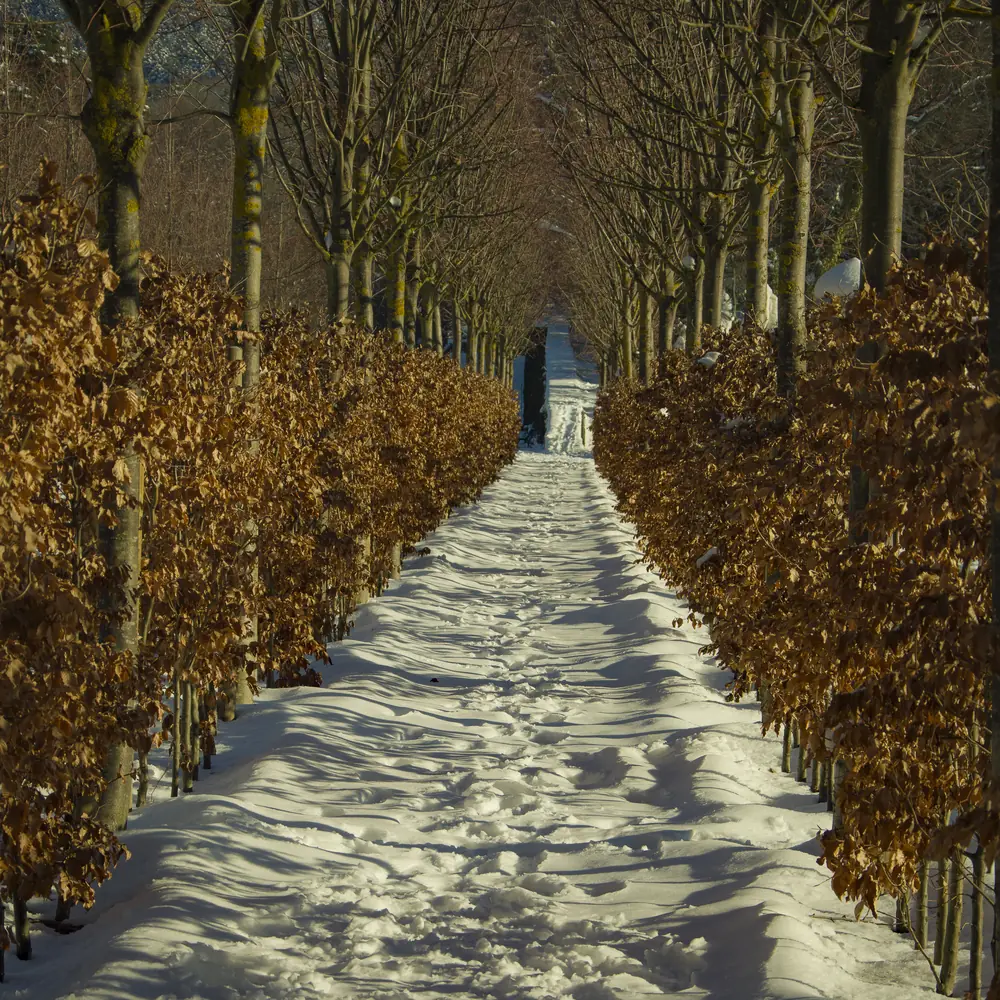
Winter is the quiet season. The rooms are calm, and if you are lucky there will be snow on the clipped hedges, which makes for some of the best photographs of the year. The gardens close at 18:00 from November to February, and the palace keeps shorter hours too, so an early start matters. There are no fountain shows to plan around. The mountain road over Navacerrada can be difficult in snow, so the motorway route is the safer choice for drivers. Dress for real cold: this is high ground.
Which day of the week
The palace closes on Mondays, so that is the day to avoid if you want the rooms. The gardens are listed as open every day, which makes Monday workable for a walk outdoors only. Tuesday to Friday are generally calmer than weekends. Patrimonio Nacional also lists free-entry hours on Wednesday and Sunday afternoons for citizens and residents of the European Union and for Ibero-American citizens, with proof required, so those afternoons may be busier. Guided tours and fountain shows follow their own rules, so check before you count on them.
Which time of day
The palace opens at 10:00 from Tuesday to Sunday. If you can be there at opening, you get the rooms at their calmest and the gardens in cool morning light. Day tours from Madrid spend at least an hour on the road, so they cannot reach the town at 10:00 unless they leave very early. The late afternoon can be quiet again as those tours leave for Segovia or Madrid. Last entry to the palace is an hour before closing, so aim to be inside by mid-afternoon if you also want time in the gardens. On show days, the pattern reverses: the gardens fill before the water starts and empty soon after.
Book your transport last
Since fountain dates can shift and the palace has its own closures for ceremonies and local holidays, settle the date before anything else. Read the season on Patrimonio Nacional's page, then choose your coach or train, and check the M8 sheet for that day of the week last of all. Nothing here is worth a wasted trip, and a spare hour in the gardens is easy to fill.
How to choose, in one minute
For the full display, choose 30 May, 25 July or 25 August and arrive early. For the fountains without the biggest crowds, take a scheduled day in June or early July. For the most relaxed walk, go on a weekday in late September or October. For photographs, a clear morning after snow is hard to beat. And for the palace rooms, anything except Monday works.
Frequently asked questions
When do the fountains run at La Granja?
On scheduled days in spring and summer, with all of them traditionally turned on for 30 May, 25 July and 25 August. Patrimonio Nacional publishes the current season on its palace page, so confirm your date there.
Do I need a separate ticket for the fountains?
Patrimonio Nacional lists a separate fountains admission for scheduled shows. It is set apart from palace entry, so check what your date requires.
Is the palace open on Mondays?
No. It closes on Mondays. The gardens are listed as open every day.
Is La Granja worth visiting in winter?
Yes, if you come for the rooms and the setting. There are no water shows, the gardens close early, and it can be very cold, but there are far fewer people and sometimes snow.
How high is La Granja?
About 1,190 metres, so it is usually cooler than Madrid. Bring a layer even in summer.
Sources
- Patrimonio Nacional: Royal Palace of La Granja, opening hours and fountains
- Patrimonio Nacional: free admission rules
- Wikipedia (Spanish): Palacio Real de La Granja de San Ildefonso
- Wikipedia: Real Sitio de San Ildefonso
- Om Viajes y Relatos: when the fountains run in 2026
- Guías Viajar: fountain days at La Granja